Diode vs IPL: Key Differences in Hair Removal Technology
Diode laser and IPL both support long-term hair reduction, but they use different light sources, wavelengths and targeting methods. Learn their key differences, benefits and professional-use considerations.
Diode vs IPL: understanding the difference
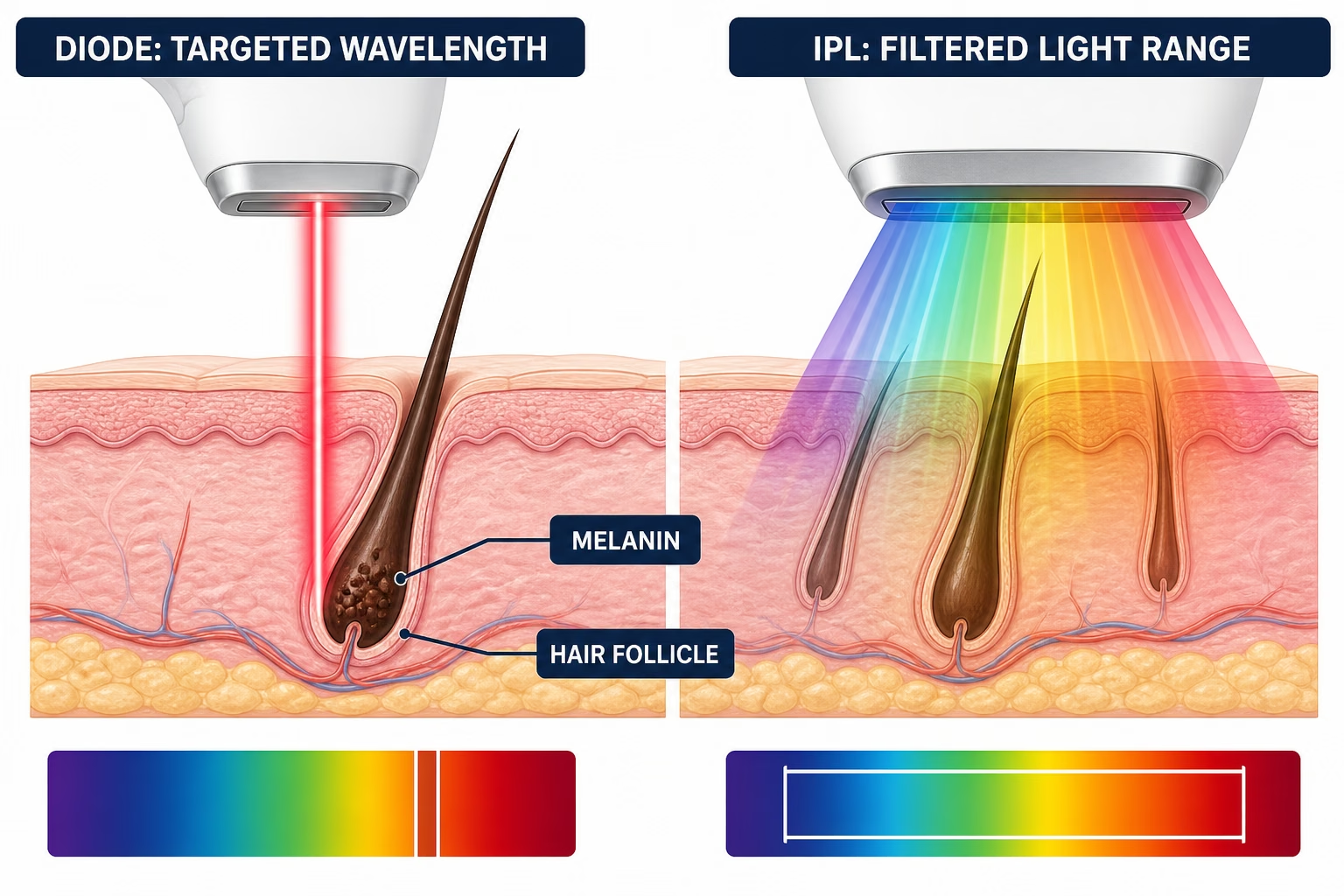
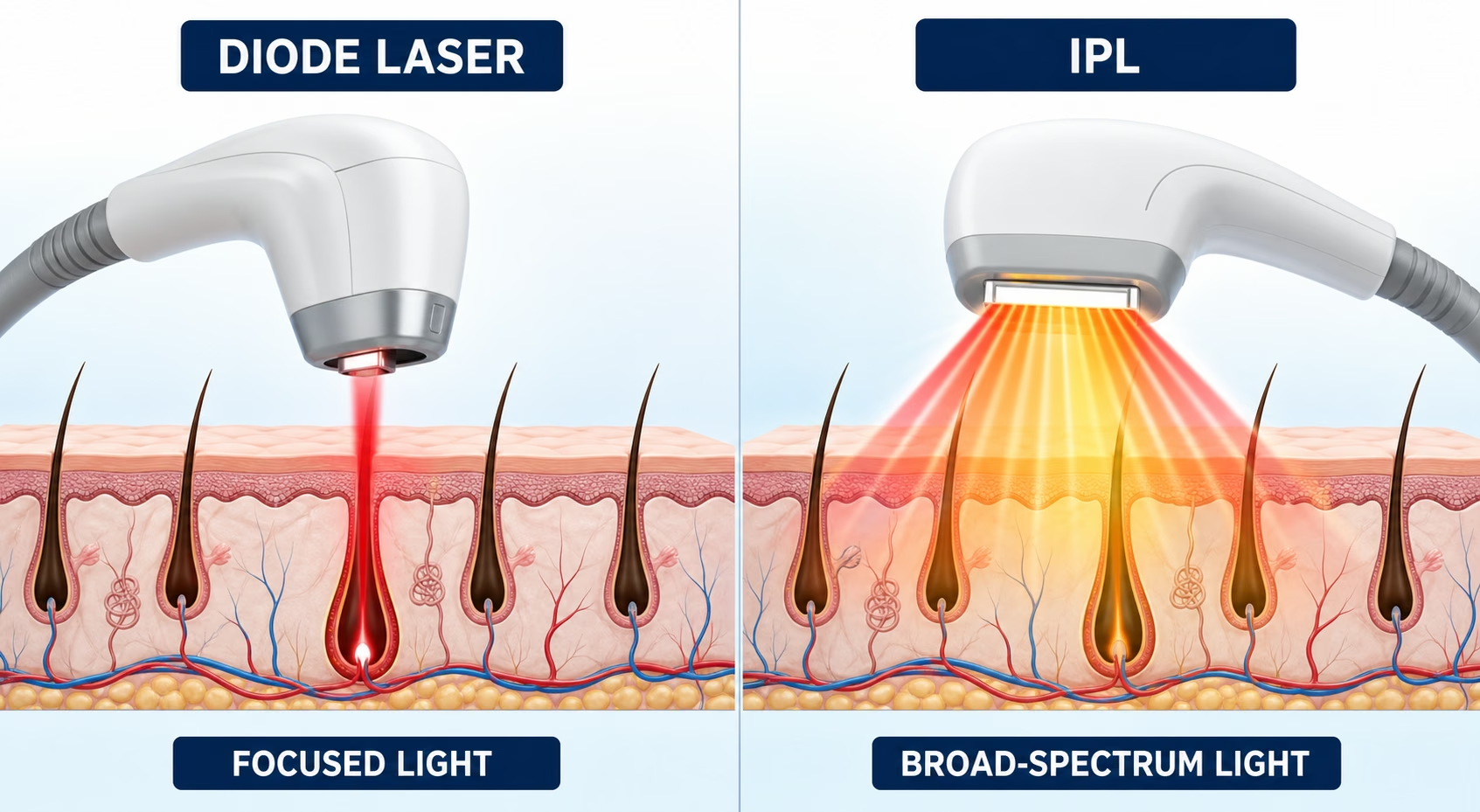
Diode laser and IPL are both light-based technologies used for long-term hair reduction, but they are not the same. A diode system is a true laser that delivers a concentrated wavelength or defined wavelength combination. IPL, short for Intense Pulsed Light, uses a filtered flash of broad-spectrum light. That difference affects how each technology targets hair, how treatments feel, and which clients or services may be the best match.
What is a diode laser?
A diode laser uses semiconductor technology to produce a focused beam of light. Hair-removal systems commonly work near 800 to 810 nm, although professional multi-wavelength platforms may combine wavelengths such as 755, 808 and 1064 nm. The selected light is absorbed by melanin in the hair, converted into heat and directed toward the follicle.
Because the energy is concentrated within a defined wavelength range, diode systems are designed for precise follicle targeting. Professional machines often include contact cooling, adjustable fluence, pulse-width controls and treatment modes that allow trained operators to adapt protocols to the client's skin type, hair colour, hair thickness and treatment area.
What is IPL?
IPL is not a laser. It uses a xenon flashlamp to emit a broad range of visible and near-infrared light. Filters remove unwanted portions of the spectrum so that a selected band can target melanin in hair or, on suitable professional platforms, other chromophores associated with pigmentation, vascular appearance and photorejuvenation treatments.
Because IPL delivers a wider light range, it can be a versatile platform. However, results depend heavily on the quality of the device, filter selection, pulse structure, cooling, skin assessment and operator training.
Diode vs IPL: the key differences
Light source
• Diode: A true semiconductor laser with a focused wavelength or wavelength combination.
• IPL: A broad-spectrum flashlamp system using filters to select a useful light range.
Targeting
• Diode: Concentrated energy is designed to target melanin within the hair follicle precisely.
• IPL: A wider filtered spectrum covers a broader range of light and treatment applications.
Common professional use
• Diode: Primarily selected for structured hair-reduction programmes.
• IPL: Used for hair reduction and, depending on the device and regulatory indications, selected skin-rejuvenation, pigmentation or vascular-appearance protocols.
Skin and hair considerations
• Diode: Modern professional diode systems can offer multiple wavelengths and adjustable settings for a wider range of client profiles.
• IPL: Careful filter and parameter selection is essential, particularly when treating darker skin tones or recently tanned skin.
Treatment experience
• Diode: Contact cooling and focused delivery can support controlled treatment, although discomfort varies with settings and the treatment area.
• IPL: Larger flash windows can cover broad areas efficiently; comfort depends on pulse settings, cooling and the individual device.
Consistency
• Diode: Defined laser wavelengths can make protocols more repeatable when the same handpiece and settings are used.
• IPL: Performance can vary considerably among platforms because lamp output, filters, pulse shapes and cooling systems differ.
Which technology is more effective for hair reduction?
Both diode laser and IPL can reduce hair when the client is suitable and the device is used correctly. Randomised comparative studies have produced nuanced results rather than a universal winner. Some trials found stronger long-term hair-count reduction with diode laser, while other studies found similar short-term results between the two technologies. Diode treatment was more uncomfortable in some comparisons, but that finding is also device- and setting-dependent.
The practical conclusion is that technology name alone does not determine results. Device quality, wavelength or filter choice, energy settings, pulse width, cooling, treatment intervals, operator skill and the client's hair-growth cycle all matter.
Who may prefer diode laser?
A professional diode system may be the stronger choice when a clinic wants:
• A platform focused primarily on hair reduction
• Defined laser wavelengths and repeatable treatment parameters
• Multi-wavelength options for different hair depths and client profiles
• Integrated contact cooling
• High-volume hair-reduction workflows
Who may prefer IPL?
A professional IPL platform may be attractive when a practice wants:
• Hair reduction plus additional light-based facial applications
• Interchangeable filters for different approved protocols
• A large treatment window for broad areas
• A flexible multi-service platform
• A potentially lower equipment entry cost, depending on the model
Diode vs IPL for different skin tones
Melanin is the target in hair reduction, but it is also present in the skin. This means an incorrect wavelength, filter, fluence or pulse duration can heat the surrounding skin instead of selectively targeting the hair.
Skin tone, tanning history, hair colour and hair thickness must therefore be assessed before treatment. Professional diode and IPL devices may both be used across different client groups when their exact regulatory indications allow it, but darker or recently tanned skin generally requires especially cautious device selection and conservative parameter planning. A patch test and qualified clinical judgement are important.
What results should clients expect?
Neither technology should be marketed as instant or guaranteed permanent removal. Hair grows in cycles, and light-based treatments are most effective when follicles are in an active growth stage. This is why a course of sessions is normally required, followed by maintenance when necessary.
Results vary according to:
• Hair colour and thickness
• Skin tone and recent sun exposure
• Treatment area
• Hormonal influences
• Device type and condition
• Selected settings and cooling
• Session timing and consistency
• Practitioner experience
Safety and professional operation
Diode laser and IPL are powerful energy-based technologies. Professional systems should be operated only by appropriately trained practitioners in a controlled treatment environment. Protective eyewear, correct client screening, patch testing, equipment maintenance, ventilation and adherence to the manufacturer's contraindications are essential.
The correct choice is not simply diode or IPL; it is the right regulated device, settings and protocol for the individual client and intended treatment.
Frequently asked questions
Is IPL a laser?
No. IPL is a filtered broad-spectrum light source, while a diode system is a true laser.
Is diode always better than IPL?
Not automatically. Diode systems are often preferred for dedicated hair-reduction programmes, but device quality, settings and client suitability have a major effect on outcomes.
Which one is less painful?
There is no universal answer. Comparative studies have reported different comfort results, and modern cooling systems can change the experience significantly.
Can both technologies work on all hair colours?
Both depend on light absorption by melanin, so very light blonde, grey, white and some red hair may respond poorly. A professional assessment is necessary.
Final verdict
Choose diode laser when the main goal is a focused, professional hair-reduction service with defined wavelengths and repeatable parameters. Choose IPL when broader platform versatility is important and the practice has the training, filters and protocols needed for multiple light-based services.
For clinics investing in either technology, prioritise regulatory documentation, service support, training, cooling performance and reliable technical specifications—not marketing claims alone.
Evidence note: This educational comparison is informed by FDA device classifications and published randomised studies comparing diode laser and IPL hair reduction. Individual results vary, and this article is not a substitute for professional medical advice.