How Does an MNRF Machine Work? Treatment Process, Benefits and Aftercare
MNRF combines fine needles and radiofrequency energy to prompt gradual skin remodeling. Learn how the procedure works, what recovery looks like and the essential aftercare.
Microneedling radiofrequency, often shortened to MNRF or RF microneedling, combines two actions in one treatment: fine needles enter the skin at a clinician-selected depth, and radiofrequency (RF) energy creates controlled heat in the tissue. The resulting healing response can remodel collagen over time. Clinics use it for concerns such as uneven texture, certain acne scars, fine lines and mild skin laxity. Outcomes vary with the skin concern, device, settings and treatment plan.
What happens beneath the skin?
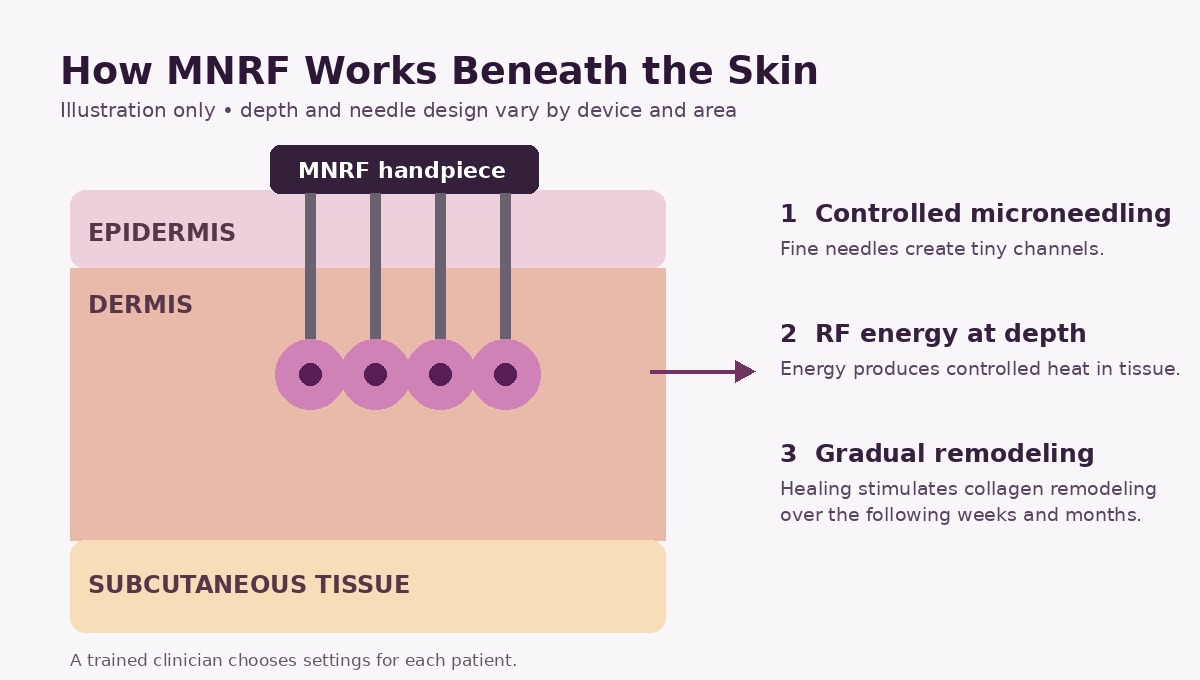
The handpiece places a pattern of tiny needles into the treatment area. RF energy passes through the needles and heats tissue around them. Mechanical micro-injury and targeted heating set off a wound-healing response that can lead to new collagen and changes in existing collagen. This remodeling develops gradually; the treatment does not instantly replace scarred or loose tissue.
Devices differ. Some use insulated needles, which concentrate RF delivery near the tips; others use non-insulated needles, which can deliver energy along more of the exposed needle. Depth, energy and pulse duration are adjustable on many systems, but there is no universal setting that suits every face or skin type. A qualified clinician must assess skin thickness, treatment area, goals and risks before choosing parameters.
The treatment process, step by step
• Assessment and preparation. A trained provider reviews the patient’s skin, medical history, medicines, recent procedures and treatment goals. They explain expected benefits, alternatives, likely recovery and potential complications. The area is cleaned and a topical numbing cream may be used as appropriate.
• Needle placement and RF delivery. A sterile, suitable tip is applied systematically to the planned areas. The provider selects settings according to the device instructions and the patient’s anatomy. Patients may feel pressure, warmth or brief pinpricks despite numbing.
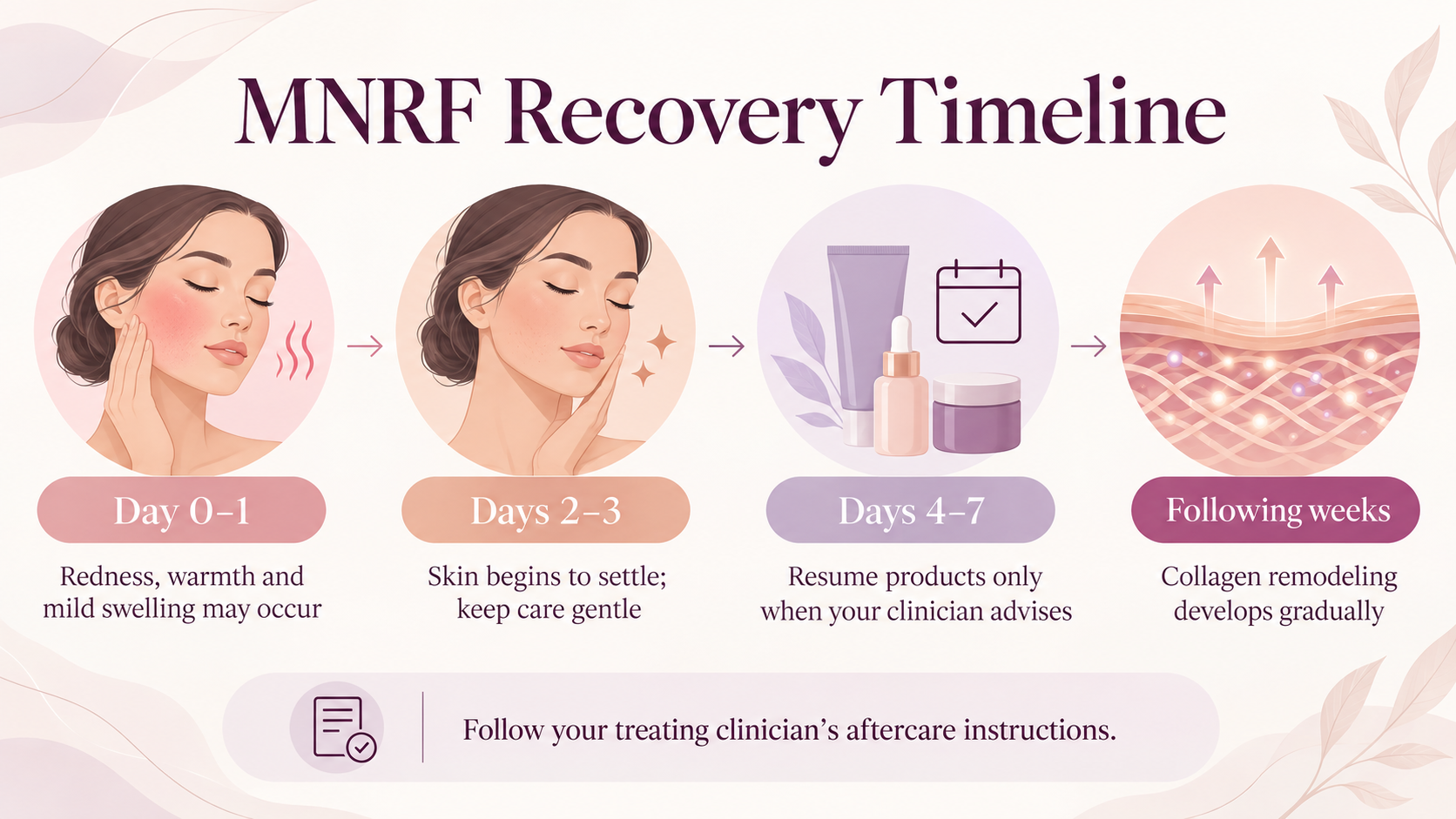
• Immediate recovery. Redness, warmth, mild swelling or pinpoint marks may follow. The clinician gives a specific aftercare plan and explains when to seek review.
• Gradual response. Texture and firmness changes, if achieved, emerge over weeks to months as tissue remodels. A clinician may recommend a course of sessions, but the number and interval depend on the individual and device.
What can MNRF help with?
Evidence supports RF microneedling as an option for selected acne scars, fine lines, texture and mild laxity. It may improve the appearance of these concerns, but cannot guarantee scar removal, a surgical lift or identical results for every patient. A consultation helps determine whether another treatment, or a combination chosen by a dermatologist, is more appropriate.
MNRF aftercare: what patients should know
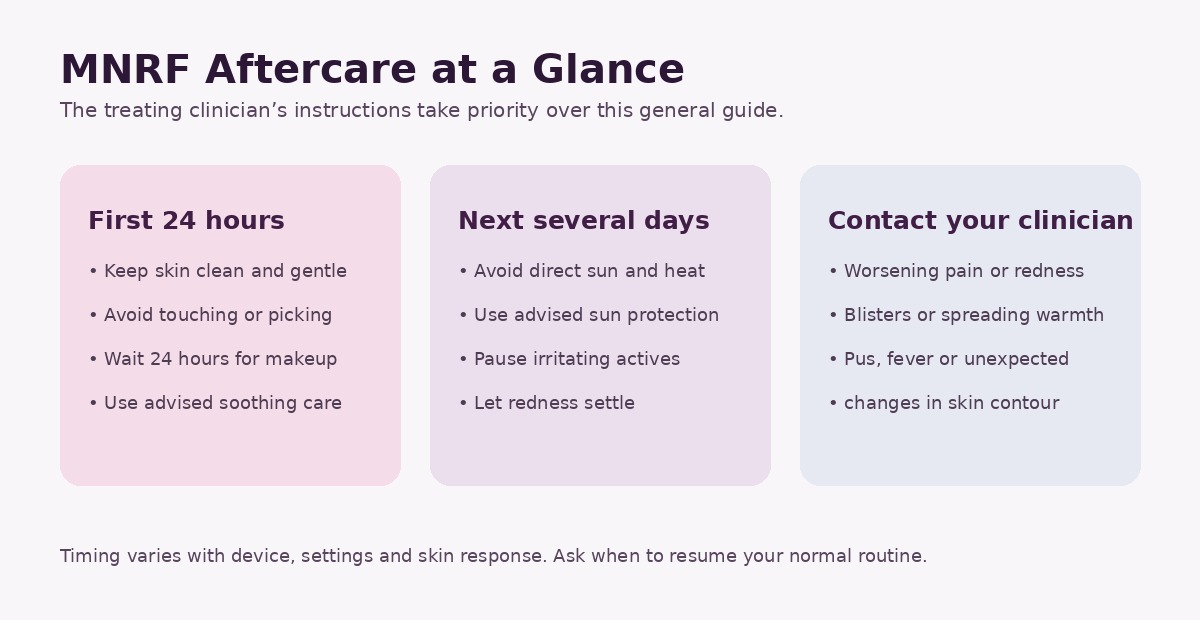
Follow the treating clinician’s written instructions first. The exact routine depends on the treatment depth, device, skin response and any products used during the procedure.
• First 24 hours: Handle the area gently, keep hands and makeup tools clean, avoid picking, and use only the cleanser or soothing product your provider recommends. The American Academy of Dermatology advises waiting 24 hours before applying makeup after microneedling.
• Following days: Limit direct sun exposure and protect the healing skin with shade and the sunscreen recommended by your provider, starting when they say it is suitable. Avoid scrubs, exfoliating acids, retinoids and other potentially irritating products until your clinician clears them. Avoid excessive heat, strenuous sweating and other activities your provider asks you to pause.
• Watch the recovery: Temporary redness and swelling can occur. Contact the treating clinician if pain, redness or swelling worsens rather than improves, or if you notice blisters, spreading warmth, pus, fever, persistent numbness or an unexpected change in skin contour. Seek prompt medical assessment for a concerning reaction.
Is it safe for every patient?
MNRF is a medical procedure that calls for a licensed, trained provider, appropriate device maintenance, sterile single-use components where required, careful patient selection and documented settings. It may be unsuitable when there is an active infection or inflammation in the area, or with certain medical circumstances; the clinician should assess these before treatment.
The U.S. FDA has reported serious complications with certain uses of RF microneedling devices, including burns, scarring, fat loss and nerve damage. Discuss both benefits and risks before booking a procedure.
For clinics considering an MNRF machine
Look beyond the model name. Ask about needle type and compatible tips, adjustable parameters, training, consumables, servicing and after-sales support. A machine is only one part of a safe service: patient assessment, operator training, treatment protocols and follow-up matter too. Beauty Enrich supplies aesthetic equipment to professional clinics; contact our team to discuss available MNRF models and product training.
Frequently asked questions
Is MNRF the same as ordinary microneedling?
No. Both use fine needles, but MNRF adds RF energy to create controlled heating in tissue.
When will I see results?
Some immediate changes may reflect temporary swelling. Collagen remodeling and any lasting improvement develop over weeks to months, and results differ between patients.
Can I wear makeup afterward?
Wait at least 24 hours after microneedling, and follow your treating provider if they advise a longer pause.
How many sessions do I need?
There is no single number. Your clinician should tailor the plan to the concern, device and skin response.
Sources
• Aesthetic Surgery Journal Open Forum: RF microneedling review
https://academic.oup.com/asjopenforum/article/doi/10.1093/asjof/ojad100/7367886
• American Academy of Dermatology: Microneedling guidance
https://www.aad.org/public/cosmetic/scars-stretch-marks/microneedling-fade-scars
• U.S. FDA: RF microneedling safety communication
https://www.fda.gov/medical-devices/safety-communications/potential-risks-certain-uses-radiofrequency-rf-microneedling-fda-safety-communication
Educational information for clinics and patients; it is not a treatment protocol or individual medical advice. A licensed clinician should determine suitability, settings and aftercare.